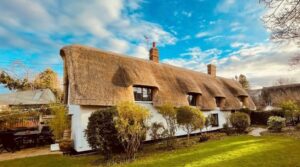
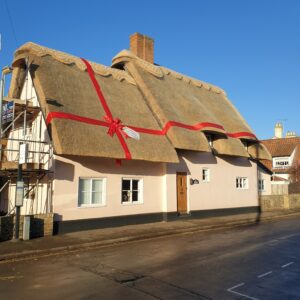
A well-thatched roof is instantly recognisable. Its smooth surface, generous coat thickness and crisp lines give traditional cottages their distinctive appearance. However, one of the most striking elements sits right at the top of the roof.
The ridge line, where the two slopes meet, plays both a practical and decorative role. It protects the most exposed part of the roof while also showcasing the craftsmanship of the thatcher. As a result, decorative ridges and straw finials have become an iconic feature of many traditional thatched properties.
Across rural England, these handcrafted details add character and individuality to cottages and heritage homes. At the same time, they demonstrate the skill and experience required to create a durable thatched roof.
What Are Decorative Ridges on a Thatch Roof?
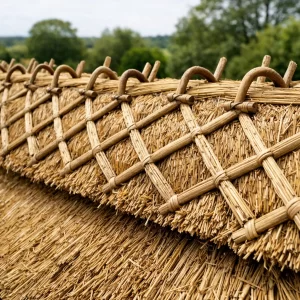
A decorative ridge is the patterned ridge cap that runs along the peak of a thatched roof. Although it adds visual interest, it primarily protects the roof’s most vulnerable point from wind and rain.
To create the ridge, a thatcher layers and compresses straw or reed along the roof apex. They then secure the material using traditional hazel spars. These spars hold the ridge firmly in place and maintain the tight structure needed to resist weather exposure.
After fixing the ridge, the thatcher trims and shapes the surface to create decorative patterns. Because of this process, the ridge becomes both functional and visually distinctive.
Common decorative ridge patterns include:
-
Diamond or chequer designs
-
Scalloped edges
-
Herringbone or chevron patterns
-
Rope or banded ridges
-
Block-cut geometric patterns
Each pattern requires careful planning and precise cutting. Consequently, the finished ridge highlights the craftsmanship behind the roof.
Why the Ridge Is So Important
Although the ridge provides decorative appeal, its structural role remains critical.
The ridge sits at the highest point of the roof. Therefore, it faces the strongest winds and the greatest exposure to rain. If the ridge fails, water can penetrate the coatwork beneath.
For this reason, experienced thatchers treat ridge construction with particular care. A well-built ridge must:
-
shed water efficiently
-
resist wind uplift
-
remain tightly compacted
-
protect the upper edge of the coatwork
Because the ridge faces the harshest conditions, it often requires renewal earlier than the rest of the roof. However, this forms a normal part of maintaining a thatched property.
Decorative Ridges as a Sign of Craftsmanship
In many ways, the ridge acts as a visible signature of the thatcher’s work. While the rest of the roof may appear smooth and uniform, the ridge reveals the precision of the craft.
Throughout the UK, regional thatching traditions influence ridge styles. Consequently, decorative ridge designs often reflect local heritage as well as the preferences of the homeowner.
A carefully designed ridge can therefore:
-
complement the proportions of a traditional cottage
-
reflect regional building traditions
-
emphasise the skill of the thatcher
When designed well, the ridge enhances the overall appearance of the roof without appearing excessive.
Raised Ridges and Flush Ridges
Decorative ridges can appear in different forms. The most common styles are raised ridges and flush ridges.
Raised Ridge
A raised ridge sits slightly above the surrounding coatwork. As a result, it creates a more prominent line along the roof peak.
This style often suits traditional cottages. In addition, the raised shape allows decorative patterns to stand out clearly.
Flush Ridge
A flush ridge sits closer to the roof surface. Consequently, it produces a more subtle and understated appearance.
Many homeowners choose this style when they want the roof to maintain a smoother profile. Nevertheless, flush ridges can still include decorative patterns.
Ultimately, the best choice depends on the building’s scale, roof pitch and local architectural character.
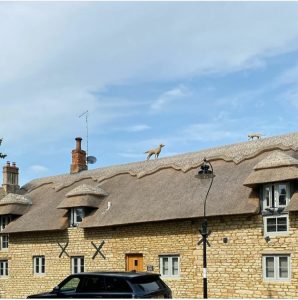
Straw Animal Finials
One of the most charming features of traditional thatch roofs is the straw finial. These handcrafted ornaments usually appear at the ends of the ridge.
Thatchers create finials by carefully shaping bundles of straw into decorative forms. Common designs include:
-
owls
-
hares
-
cats
-
horses
-
cockerels
Although these figures appear decorative, they also provide a neat finish to the ridge ends. As a result, they contribute both to the roof’s appearance and its overall detailing.
The Craft Behind Straw Finials
Creating a straw finial requires both patience and experience. First, the thatcher selects straight, durable straw. They then bind and shape the bundles to create the desired form.
Because straw naturally changes as it dries, the thatcher must anticipate how the material will settle over time. Therefore, shaping a finial requires careful judgement.
In addition, the finial must sit securely on the ridge without trapping moisture. When made correctly, the result becomes a subtle yet distinctive feature of the roof.
How Thatch Materials Influence Ridge Design
The material used in the roof also affects the appearance of decorative ridges.
Water Reed
Water reed produces crisp, defined lines. Consequently, decorative ridge patterns on reed roofs often appear particularly sharp and structured.
Wheat Reed and Long Straw
Roofs made with combed wheat reed or long straw tend to look softer and more textured. As a result, ridge patterns often appear more sculpted and organic.
In each case, the ridge design should complement the material rather than compete with it.
Choosing the Right Decorative Ridge
When selecting a decorative ridge, several factors influence the final design.
Architectural Character
The ridge should suit the age and style of the building. For instance, a modest cottage often benefits from a softer ridge pattern.
Local Tradition
In many areas, traditional ridge styles contribute to the character of the landscape. Therefore, observing nearby thatched roofs can provide useful guidance.
Proportion
The ridge must remain proportionate to the roof. Excessively elaborate patterns may overwhelm a smaller building, while very simple ridges may appear understated on larger roofs.
An experienced thatcher can help homeowners choose a design that balances aesthetics and durability.
Heritage and Planning Considerations
Many thatched properties sit within conservation areas or hold listed status. Consequently, ridge detailing may form part of the building’s historic character.
When planning roof work, it often helps to:
-
maintain traditional ridge forms where possible
-
review local examples for guidance
-
document existing ridge details before replacement
Sensitive restoration preserves the authenticity of the property while ensuring the roof remains structurally sound.
Maintaining Decorative Ridges and Finials
Like all parts of a thatched roof, decorative ridges require occasional inspection.
Because they face constant exposure to wind and rain, ridges naturally weather faster than the coatwork beneath. Therefore, routine checks help identify potential issues early.
Homeowners should watch for signs such as:
-
flattening or softening of ridge patterns
-
loose or exposed spars
-
moss growth along the ridge line
-
damage caused by birds or strong winds
If any of these signs appear, a professional thatcher should inspect the roof. Early maintenance can prevent larger repairs later.
Importantly, ridge renewal forms a normal part of caring for a thatched roof.
The Finishing Touch of a Thatched Roof
A thatched roof serves a practical purpose. It protects the building from the elements while providing insulation and durability.
However, decorative ridges and finials demonstrate that traditional roofing also contains elements of artistry. These features transform the ridge from a simple structural detail into a distinctive design element.
As a result, many homeowners view decorative ridge detailing as the finishing touch of a completed thatched roof.
When designed carefully and executed by a skilled thatcher, these details celebrate both craftsmanship and tradition. Ultimately, they help give each thatched cottage its own unique character.