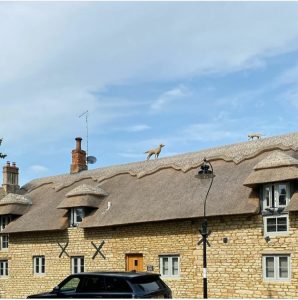
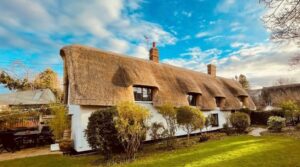
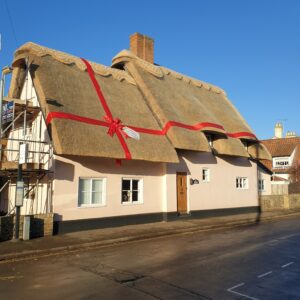
Restoring historic thatch cottages is never just a roofing job for us. It is a conservation job, a craft job, and very often a problem-solving job all at once. When we step onto an older property, we are not simply looking at worn coat work or a tired ridge. We are looking at local tradition, earlier repairs, material choices made over decades, and sometimes even archaeological evidence preserved within older layers of thatch. Historic England is clear that traditional thatch contributes to local distinctiveness and can hold important historic value beyond its practical role as a roof covering.
At Simply Thatch, that is exactly why we approach heritage work differently. We have more than two decades of experience, and we work closely with conservators and preservationists so that repairs remain robust without losing the details that give older buildings their character. That balance matters most on historic cottages, where a roof should still look as though it belongs to the building once the scaffolding comes down.
Why historic thatch restoration needs a different mindset
Historic thatch is not interchangeable. Material, method, ridge style, verge detail, and the way a coat has built up over time all affect the character of a cottage. In England alone, there are about 24,000 listed thatched buildings, and guidance for listed buildings makes it clear that changes to material, preparation method, thatching method, or external appearance can affect significance and require consent. In other words, the roof is part of the building’s heritage, not an accessory sitting on top of it.
That is why we always begin with the same question: what should we preserve, and what has genuinely failed? Historic England’s current advice stresses repair where possible, and it specifically notes that patch repair can extend the period between major works by several years. For us, that principle is fundamental. We do not strip history out of a roof simply because a full rethatch looks cleaner on day one.
Permissions often shape the programme
One of the biggest surprises for homeowners is that conservation rules can affect the timetable long before work starts. For listed buildings, like-for-like repairs may not normally need consent, but changes in thatch type, method, ridge form, or external appearance often do. Historic England also advises owners to use local authority pre-application routes where appropriate and to allow enough time before the intended start date.
That early stage matters. It is where we help homeowners assemble the right information, from photographs and method statements to details on existing materials, ridge style, and proposed repairs. Done properly, that groundwork protects both the building and the programme.
A representative heritage cottage case study
To show what restoring historic thatch cottages looks like in practice, here is a representative case study based on the kind of heritage work we regularly undertake.
We arrived at a period cottage with all the signs of a roof that had been “kept going” rather than properly restored. The ridge had softened and lost its shape. Earlier patch repairs had introduced a mismatch in colour and texture. The eaves looked heavy in some places and thin in others. Around the chimney, the detailing had become untidy, which is always a red flag on an older roof because weak junctions rarely stay localised for long.
From the ground, it looked as though the answer might be a straightforward rethatch. However, once we surveyed the roof properly, the picture changed. Parts of the main coat still had useful life in them. Some of the damage sat in exposed areas rather than across the whole roof. In addition, the cottage had the softer, more settled appearance that owners usually want to keep on a historic property. A full strip everywhere would have risked replacing character as well as material.
What we found on closer inspection
The survey told us four important things.
First, the cottage needed a heritage-led specification, not a standard modern roofing mindset.
Second, the ridge style on the house had drifted away from what suited the building. Historic England notes that flush ridges were the traditional form on the vast majority of historic thatched buildings in England, and they last as long as raised block ridges. That matters when you are trying to preserve character rather than impose a sharper, newer look.
Third, some sections called for repair rather than wholesale replacement. That is not a compromise. In the right situation, it is better conservation.
Fourth, the chimney and fire precautions needed careful thought. Current fire guidance around thatched properties makes it clear that chimney condition, flue performance, and stove use need serious attention on thatch projects.
Working within conservation rules, not against them
A lot of homeowners worry that conservation rules only slow a project down. In our experience, the opposite is true. Clear heritage thinking usually leads to better decisions.
Like-for-like first
Where a cottage has a clear local tradition, we start there. If the building has historically been straw thatched, or if its form and detailing depend on a softer, layered finish, we do not treat a switch to another material as a casual design choice. Historic England states that changes from one thatch type to another can harm significance and need clear justification, particularly on listed buildings. New Forest guidance says the same, and it also confirms that changing ridge form can trigger consent because it alters the building’s appearance.
That does not mean every heritage roof must remain frozen in time. It means changes need a reason, and they need to respect the building.
Repair where repair makes sense
Historic England’s advice on patch repair is particularly important for older cottages. It recognises that localised repair can extend the life of a roof and reduce unnecessary loss of material. On a historic building, that can be the difference between sensible stewardship and over-restoration.
For this reason, we often separate a roof into zones. The most exposed, thinnest, or most vulnerable areas may need heavier intervention. Other areas may only need careful repair, dressing, and integration into the new work. That keeps more authentic fabric in place and usually produces a more convincing final result.
How we restored the roof
Once the specification was agreed, the work became very methodical.
We repaired the failed sections, retained sound material where appropriate, and rebuilt the weathering surfaces that had genuinely come to the end of their life. We also corrected previous detailing that had left weak points at the chimney and around the ridge. Because older cottages rarely give you straight lines or uniform geometry, a lot of the skill sits in making the roof work properly without forcing it into an over-neat, modern shape.
Restoring weather performance without losing character
This is where experience really shows. A historic thatched roof still needs to perform as a roof. LABC guidance describes thatch as part of the waterproof envelope, and it notes that the steep pitches associated with thatched roofs shed water very quickly. In other words, a heritage roof is not preserved by sentiment alone. It is preserved by getting pitch, compression, thickness, drainage, and detailing right.
So we restored the cottage with two priorities in mind. We protected the visual character of the building, and at the same time we rebuilt the roof so it would throw water properly, weather evenly, and remain maintainable.
Adding discreet fire precautions where appropriate
Fire safety on historic thatch requires judgement. Historic England’s research with the Fire Protection Association found that wood-burning and multi-fuel stoves, chimney defects, and burning material ejected from flues are major concerns in thatched properties. Meanwhile, current technical guidance for thatched roofing also refers to fire-resisting boarding or membrane systems and compliant chimney detailing where design and heritage constraints allow.
On heritage work, we never bolt modern solutions on without thinking. We look at whether a full strip gives us the opportunity to introduce a discreet fire barrier, whether the flue arrangement is appropriate, whether the chimney detail needs improvement, and whether the wider fire strategy, including alarms and access, stands up to scrutiny. The right solution always depends on the building.
Finishing details that make the difference
Older cottages rarely suit an overworked finish. They suit confidence and restraint.
That is why the final stage on a historic restoration matters so much. Ridge form, eave line, verge finish, and the relationship between roof and chimney all have to feel right. Historic England notes that flush ridge was the traditional form on most historic thatched buildings, and where that is the appropriate answer we are perfectly happy to let the building lead. Good heritage work should look settled, not shouted.
Before and after, what really changed
Before the work, the cottage looked tired, vulnerable, and slightly confused. It had the sort of patched-up appearance that tells you different repairs have been done at different times, without a consistent conservation plan behind them.
After the work, the change was obvious, but it was not theatrical. The roof looked whole again. The lines read properly. The ridge suited the age of the property. Water-shedding details made sense. The cottage kept its softness and character, but it regained authority.
That is the result we always want on historic work. We do not want a roof that looks brand new for the sake of it. We want a roof that looks right.
What homeowners should do before restoring a historic thatch cottage
If you own a period or listed cottage, the best thing you can do is involve a specialist thatcher early. The right early questions save a huge amount of time later.
We advise homeowners to ask:
- What material is on the roof now, and is it significant?
- Is repair still viable in any areas?
- Does the current ridge suit the building’s historic character?
- Will the proposal change the roof’s appearance, method, or material?
- Do we need early conversations with the conservation officer or local authority?
- Is there an opportunity to improve chimney or fire protection details while work is underway?
Those are the questions that turn a reactive roofing project into a proper restoration plan. They also align with the current heritage guidance that asks owners and professionals to think about significance before changing material or method.
Frequently asked questions about restoring historic thatch cottages
Does a listed thatched cottage always need consent for rethatching?
Not always. Guidance for listed buildings says like-for-like rethatching, where the same material and method are used and the character is not altered, will not normally require consent. However, changing material, changing method, removing historic layers, or altering the ridge or overall appearance often will.
Is it better to repair or fully replace a historic thatched roof?
That depends on condition, exposure, material, and significance. Historic England specifically notes that patch repair can extend the interval before full recoating or rethatching by several years, so repair should always be assessed properly before more material is removed than necessary.
Can modern fire precautions be added to a historic thatched roof?
Often, yes, but they need careful design. Current guidance discusses fire-resisting barriers, compliant chimney details, alarms, and safer flue arrangements. On listed or highly significant buildings, the heritage impact of those measures still needs to be weighed and specified carefully.
How often does the ridge need attention?
Typical maintenance guidance says the ridge usually needs attention sooner than the main coat. LABC notes that the ridge bears the brunt of the weather and often requires work on average every 10 to 15 years, depending on exposure and material.
Final thoughts
For us, restoring historic thatch cottages is about judgement as much as craftsmanship. We have to read the building, understand its local tradition, respect its surviving fabric, and still deliver a roof that performs in modern conditions. That is why heritage thatching is never a copy-and-paste job.
Done properly, a restoration should not erase the cottage’s past. It should protect it, strengthen it, and let it carry on looking like itself for decades to come. And in our view, that is what good thatching has always been about.