Introduction: A Day in a Thatch Covered World
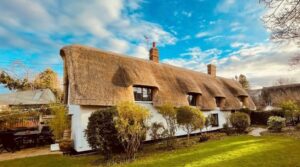
Its early morning, the sun’s just starting to break through the mist that hangs low over the hedgerows in the English countryside. Golden light spills over a quaint little cottage, its roof covered in a thick layer of straw that looks just as it did 300 years ago or yesterday. Up on the roof, a master thatcher is already hard at work, their hands moving with a practiced ease as they weave a new layer of reed into place. To a passer by, it might look almost effortless – almost like a timeless scene from another era. But this is anything but effortless. It demands a whole lot of strength, patience, a deep respect for the craft – and a healthy dose of technical know-how that hasn’t changed all that much in thousands of years.
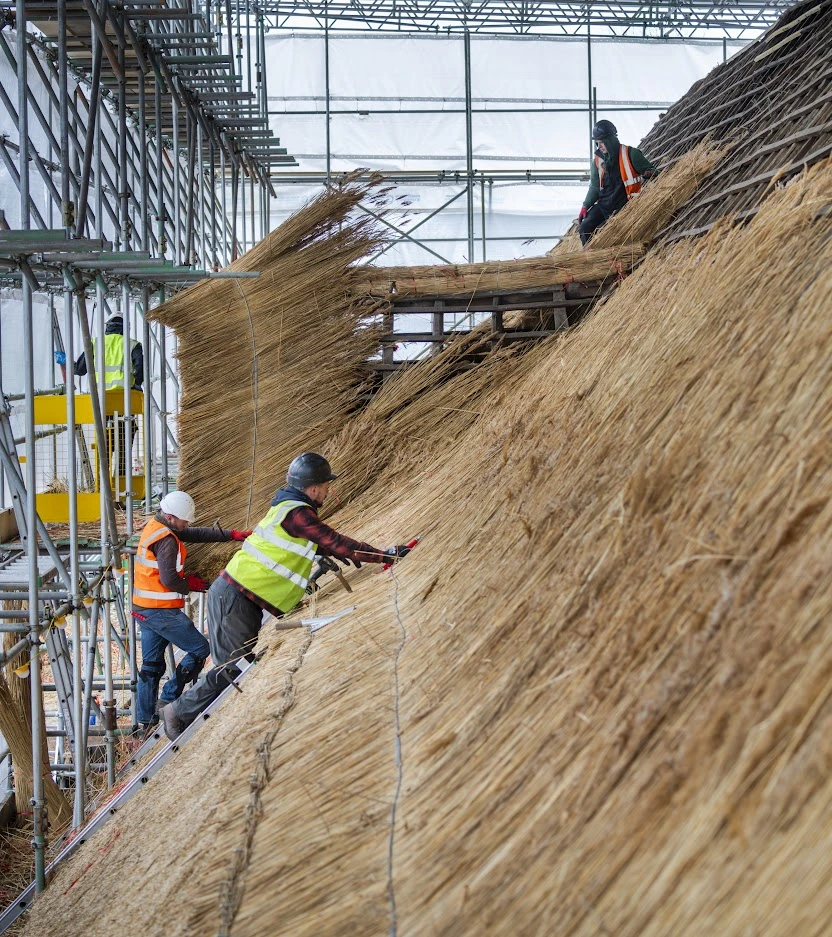
This is the magic of traditional thatching. Its roots go back a staggering 10,000 years and yet it’s still the go-to roofing method for heritage properties across Britain today.
An Ancient Craft that’s Steeped in Heritage
Thatching’s been around for yonks – that’s since prehistoric times. Archaeologists reckon that people have been using straw, reeds and grass to keep the rain off since, well, since ever. All before the days of clay tiles and slate quarries, natural materials were the only game in town.
Thatched cottages have become the embodiment of rural charm and there’s a reason why there are still an estimated 60,000 of them across the UK. When people think of traditional England, they think of rolling hills, stone churches and the classic little cottage with a thatched roof that’s just begging to be put in a painting. Its no surprise that so many of these little gems still stand today – a testament to their enduring beauty and practicality.
But what a lot of people don’t reckon on is that thatch is more than just a pretty face. It’s been doing the job for 10,000 years. When laid right, a thatched roof is like a dense, layered blanket that lets rain run straight off it while still keeping the warmth in. It’s like having a free, natural air conditioner – minus the electricity bill. And its not just the air that keeps warm – modern roofing materials don’t have that either.
What’s even more remarkable is how little the actual process has changed. A master thatcher working today would be right at home with one from 300 years ago. They’d recognise the tools, they’d know exactly how to prepare the materials – and they’d still be laying the roof by hand, course by course. This continuity is no accident – its a testament to how good this method is.
What It Takes to Become a Master Thatcher
You don’t become a master thatcher overnight – its something that takes decades of hard graft. Most master thatcher’s started out as apprentices, working under some of the best in the business to learn the ropes.
An apprenticeship can take up to five years or more – a whole heap of time spent mastering every aspect of the trade: from getting the materials right to nailing the roof shape. And the one thing that makes it all worthwhile? Every roof is different – pitch, curvature, chimney placement, wind exposure – it all adds up to a different result every time.
Some master thatcher’s even come from families where thatching’s been passed down the ages. Its not unheard of for their dads, grandads and great-grandads to have been thatcher’s too. Tools have been passed down alongside the expertise – some of them are actually still the same tools that their ancestors used. Getting the accreditation from a national body like the National Society of Master Thatcher’s is the icing on the cake – it means they’ve proven themselves to be not just good, but really, really good.
Materials and Tools of the Trade
Thatching doesn’t take a lot of fancy materials to get done – just good old straw or reed and that’s what British thatcher’s stick to the most:
- Norfolk reed (water reed): known for being super durable – normally lasts 30-40 years
- Combed wheat reed: usually lasts 15-25 years – often the go-to for traditional heritage properties
- And then there are all the other regional materials like rye straw, sedge or heather.
Its all about choosing the right material for the job – and that means considering the climate, where you are in the country and what sort of property you’re working on. If you’ve got a lot of rain where you are, you might want to go for the reed – if you’re in a more traditional farming area, wheat straw might be the way to go.
Once you’ve got your material, you dry it out and bundle it up. Before you put it on the roof, it gets a good soaking to make it pliable – stops it breaking. Then the straw gets formed into these little bundles called yealms – neat little sections that lay flat.
Thatching’s all about the old-school tools:
- Leggett : whats used to give the thatch a good dressing and compact it
- Eaves knife: the tool of choice for trimming the thick thatch
- Hazel spars : little wooden fixings that you twist in by hand to secure each layer
- Mallet & shears : for shaping and finishing off
While you might see some of the new-fangled stainless steel fixings popping up here and there, the wood ones are still the best bet – after all, they’ve been used for centuries and still do the job just as well.
How a Master Thatcher’s Thatches a Roof
Every thatching project follows a pretty straightforward, but highly skilled process, despite the fact that all roofs are unique.
1. Taking Stock and Preparing the Site
The roof is thoroughly inspected – for re-thatching, worn layers get stripped away & the sound bits are kept if possible. That bit is a lot of hard work and a right mess – old straw gets ripped off, revealing the timber beneath. It’s not the most glamorous job but someone’s got to do it.
The pitch of the roof gets assessed too, as thatch works best at angles between 45 & 55 degrees to make sure it sheds water properly.
2. Laying it all Down
Thatching starts at the eaves and works its way up in horizontal courses. Each layer overlaps the one below, creating a dense, weather-resistant surface that’ll keep you dry.
Bundles are put down with a fair bit of precision, secured with some hazel spars and dressed with a leggett to get a smooth finish. It can get quite thick in some places – 12 inches or more is not uncommon.
This bit of the process requires a lot of strength & precision. Every movement has to be spot on, so it all stays even & aligned & gets properly compacted.
3. Getting the Details Right
Chimneys, dormers and roof curves all need some particular expertise – flashings have to integrate with the thatch properly, and water flow’s got to be directed just so. It’s a small thing, but getting the bundle placement right can make all the difference to the overall look.
That’s where experience really counts.
4. Crafting the Ridge
The ridge is a bit of a special case – it’s both the structural bit that holds the whole roof together and the decorative bit that makes it look nice. There are two main styles:
- Flush ridge
- Block ridge
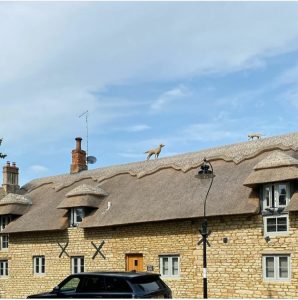
You might see some decorative patterns, braided detailing or even a bit of ornamentation – it all depends on the style of roof and the skill of the thatcher. The ridge has to withstand all the weather that comes its way, so it’s fixed good and proper.
Often, the ridge is the bit that shows off the individual skill of the master thatcher.
5. Tying it All Up
Final trimming gets done to make sure all the eaves & surfaces are nice and smooth, and all the fixings are double-checked. You might even add some bird deterrent netting for good measure.
The site gets cleared up, leaving behind a roof that looks almost hand-sculpted out of straw. Re-thatching a roof from scratch can take up to ten weeks, & that’s assuming weather plays ball. This is a craft, not just a rush job to get it done.
Why Thatched Roofs Are Still the Preferred Choice
Despite all the modern alternatives, thatch is still going strong.
Aesthetics
Thatch is just plain pretty – it adds character to a property and gives it some real identity. In fact, in England, a whopping 97% of thatched buildings get listed – it’s a big deal for preserving traditional materials.
Keeping it Warm
The natural insulation of thatch makes heating and cooling the house loads easier. It’s like having a thermal blanket on top of your roof.
Being Green
Thatch is a renewable, biodegradable & locally sourced material – old thatch can even be composted, and growing it doesn’t need a lot of chemicals.
It’ll Last a Long Time & Won’t Break the Bank
Water reed can last decades – the ridge might need replacing every 10-15 years, but with a bit of maintenance & inspections, thatch can give you many years of protection. And with modern fire prevention measures in place, you don’t have to worry so much about fires.
Keeping the Craft Alive
Regulations for listed buildings have helped keep the craft going, and apprenticeships are still going strong. It’s a trade that’s in good health.
The industry’s not dead – there are hundreds of thatchers out there & a strong demand for their services.
Simply Thatch: Quality & Heritage Combined
In a world where expertise matters, Simply Thatch is right at the front of the pack. Accredited Master Thatcher’s bring their years of experience to every project, and the company’s leadership is made up of recognised master craftsmen who’ve worked on some of the UK’s most impressive thatched properties.
The approach balances traditional technique with modern standards – materials are sourced responsibly and time-honoured methods are respected. Contemporary safety & compliance requirements are all integrated seamlessly.
Beyond just installing the roof, Simply Thatch offers:
- Roof inspections to make sure everything’s in good nick
- Insurance & mortgage surveys to give you peace of mind
- Maintenance planning to keep your roof going for years to come
- Partial & full re-thatching to get your roof looking like new
- Preventative repairs to stop small problems turning into big ones
It’s a holistic approach that means homeowners get not just a roof, but a foot in the long-term stewardship of their property.
Every project reflects Simply Thatch’s commitment to quality, heritage and longevity.
Conclusion: Preserving a Craft for the Future
As the day draws to a close, the finished roof glows in the fading light. Every bundle of straw has been placed by hand, every ridge detail carefully shaped.
But behind that beauty lies a deep respect for tradition, a lot of hard work & dedication, and years of training.
Choosing a thatched roof today isn’t just a fashion choice – it’s an investment in heritage, in sustainability, and in craftsmanship. It connects a property to centuries of architectural history while giving you the modern comforts & efficiency you need.
Master thatchers continue to carry the craft forward, adapting with care & preserving with faithfulness.
With specialists like Simply Thatch guiding the process, thatching remains a living, evolving tradition.
A thatched roof is more than just a roof – it’s a statement of character and a testament to the skill of the craftsman who built it.