Finding the right UK thatching services is about more than choosing someone who can put reed or straw on a roof. A thatched property needs specialist knowledge, careful material selection, honest maintenance advice and skilled hands that understand how traditional roofs perform in real weather.
At Simply Thatch, we help homeowners look after thatched roofs across the country, from small cottage repairs to full re-thatching, surveys, re-ridging, moss removal and heritage restoration. We also work with commercial properties, but our approach remains the same. We assess the roof properly, explain what we find, and recommend the work that genuinely protects the property.
That matters because thatch is not a standard roofing material. It behaves differently from tile or slate, and it needs specialist care at the right time. As a result, good thatching is part craft, part building knowledge and part long-term maintenance planning.
What Do UK Thatching Services Include?
Professional UK thatching services cover the full life cycle of a thatched roof. That includes new work, repair work, inspections, maintenance and specialist advice for older or listed buildings.
At Simply Thatch, our services include:
- Straw roof thatching
- Reed roof thatching
- Long straw thatching
- Thatched roof maintenance
- Re-ridging
- Thatch moss removal
- Thatched roof surveys
- Insurance surveys
- First-time buyer advice
- Historic building restoration
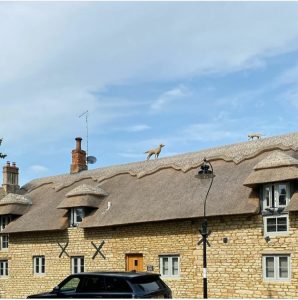
- Decorative features and animal finials
- Commercial thatching
Simply Thatch’s service pages set out this broad range clearly, including straw, reed and long straw thatching, maintenance, re-ridging, moss removal, historic building restoration, surveys and commercial thatching.
Straw Roof Thatching
Straw thatching has a long history in rural Britain, and many older cottages still rely on straw for their traditional appearance. It gives a softer, more textured finish than some reed roofs, which can suit period homes particularly well.
We provide complete straw roof thatching services, from assessment and repair to larger re-thatching projects. However, we always begin by looking at what the roof actually needs.
Straw Roof Maintenance
Straw roofs need regular care to maintain their depth, shape and weathering ability. For example, a roof may not need a full re-thatch, but it may need local patching, ridge attention or careful repair around vulnerable areas.
Simply Thatch’s straw roof guidance explains that straw roof maintenance helps maximise the longevity of the roof, and it recommends annual surveys to identify issues before they become major works.
Therefore, we see maintenance as a practical way to preserve the roof, not just a response to obvious damage.
Reed Roof Thatching
Reed roof thatching offers a clean, durable and well-defined finish. Many homeowners choose reed because it can provide strong weathering performance when the roof pitch, material quality and workmanship are right.
Although reed roofs can look neater than long straw, they still require specialist care. The ridge, fixings, eaves, verges and chimney details all need attention over time. Consequently, a reed roof should never be treated as maintenance-free.
Choosing the Right Material
Material choice should always suit the building. In some cases, reed may be the right option. In others, straw or long straw may better match the property’s age, character or local tradition.
This is where specialist advice matters. We look at roof pitch, exposure, existing material, conservation requirements and the homeowner’s long-term plans before recommending a material.
Long Straw Thatching
Long straw thatching creates a softer, more rustic appearance and remains strongly associated with traditional rural buildings. It can suit older cottages where a sharper finish would look out of place.
Simply Thatch’s long straw thatching page explains that straw roofs have been a traditional feature of rural British construction, partly because straw was historically abundant, and that long straw roofs have a distinctive, picturesque appearance.
When Long Straw Works Best
Long straw may be especially appropriate where the building already has that character, or where conservation expectations support a like-for-like approach. However, as with any thatch material, it must be laid correctly and maintained properly.
A good thatcher will never recommend a material purely because it is familiar. Instead, they will consider how it performs on that specific roof.
Thatched Roof Maintenance
Maintenance is one of the most important parts of our UK thatching services because it helps homeowners avoid unnecessary major work. A well-maintained thatched roof can last for many years, but it needs regular checks and timely repairs.
Simply Thatch’s maintenance guidance explains that services can include patch work damage, re-ridging and moss removal, all of which help keep the roof in working order.
What We Look For
During maintenance visits, we commonly check:
- Ridge condition
- Exposed fixings
- Moss and lichen growth
- Loose or lifted areas
- Bird or vermin damage
- Eaves, verges and valleys
- Chimney and flashing details
- Signs of thinning or water tracking
In practice, maintenance works best when homeowners act early. A small repair in spring or summer can often prevent more serious deterioration during winter.
Re-Ridging Services
The ridge sits at the highest point of the roof, so it takes the most direct exposure from wind, rain and frost. For this reason, it usually wears faster than the main coatwork.
Simply Thatch’s re-ridging guidance explains that the ridge is one of the most important areas to maintain, and the company’s maintenance advice recommends re-ridging around every 10 to 15 years, depending on roof angles and conditions.
Why Re-Ridging Matters
Re-ridging can extend the life of the main roof by restoring protection at the apex. It may also improve the roof’s appearance, especially where the ridge has flattened, loosened or lost its original shape.
However, re-ridging should not hide deeper problems. Before we recommend it, we check whether the coatwork beneath still has enough depth and strength to justify the work.
Thatch Moss Removal
Moss and lichen can look harmless, especially on older cottages. However, heavy growth can hold moisture against the roof and slow drying. Over time, that can shorten the roof’s useful life.
Thatch moss removal needs care. Homeowners should not pressure wash, scrape aggressively or pull at the surface because this can damage sound material. Instead, a specialist should assess the amount of moss, the roof’s exposure, nearby trees and whether moisture is lingering in particular areas.
When Moss Becomes a Concern
Moss removal may be worth considering when:
- Growth looks heavy or widespread
- The roof stays damp for long periods
- Nearby trees create shade
- Moss gathers around ridges or junctions
- The thatch surface starts to look compacted
As a result, moss control is not simply about appearance. It is part of keeping the roof breathable, dry and functional.
Thatched Roof Surveys
A thatched roof survey gives homeowners clear, specialist information about the condition of the roof. This can be useful before buying a thatched home, arranging insurance, planning repairs or deciding whether a re-thatch is needed.
Simply Thatch’s survey guidance states that a thatched roof survey is substantially different from a regular house survey because of the complexity, build considerations and risks associated with thatched roofs. It also explains that a survey can advise on decay, maintenance, repairs, replacements and forecasts for future work.
What a Survey Can Tell You
A professional survey can help clarify:
- What material is on the roof
- Whether the ridge needs attention
- Whether patch repairs will be enough
- Whether moss or airflow issues exist
- Whether there are insurance concerns
- Whether a full or partial re-thatch is likely
- What work should be prioritised
For first-time thatched homeowners, this kind of clarity can make ownership feel far less daunting.
First-Time Buyer Support
Buying a thatched property can feel overwhelming if you have never owned one before. There are different maintenance expectations, insurance questions and survey requirements to consider.
Simply Thatch’s first-time buyer guidance recommends getting a roof survey from a certified specialist so buyers can understand roof lifespan, potential problems and likely maintenance needs before committing fully. It also highlights insurance as an important consideration.
How We Help New Owners
We help first-time buyers understand what they are taking on. For example, we can explain the likely condition of the roof, what work may be needed soon, what can wait and how to plan maintenance after moving in.
This is not about putting people off thatched homes. Instead, it is about helping them buy and own one with confidence.
Historic Building Restoration
Historic thatched buildings need a careful approach. A thatched roof often forms part of the character of the property, especially where the building is listed or sits in a conservation setting.
Simply Thatch’s service guidance explains that historic building restoration brings different challenges because protected properties can involve strict guidelines, and thatching work must meet requirements for historical restoration.
Preserving Character
On heritage projects, we look at more than the roof’s surface. We consider material choice, ridge style, local tradition, existing detailing and whether repairs should preserve as much sound material as possible.
Therefore, historic restoration is not just about making the roof look new. It is about keeping the building authentic while making sure the roof remains weatherproof and structurally sound.
Commercial Thatching
Although many people associate thatch with cottages, commercial buildings also use thatched roofs. Pubs, hospitality venues, accommodation providers and heritage attractions often rely on thatch as part of their identity.
Simply Thatch’s commercial thatching page explains that the company works with commercial clients across the UK, including public houses and accommodation providers, and provides annual inspections, insurance reports, emergency maintenance, repairs, re-ridging and full roof re-thatching. It also notes that Simply Thatch is SSIP approved and SMAS accredited.
Why Commercial Work Needs Planning
Commercial properties often need careful scheduling because access, safety, customer disruption and insurance requirements all matter. Consequently, we approach these projects with clear planning and practical communication from the start.
Why Homeowners Choose Simply Thatch
Homeowners come to us because they want specialist advice before they spend money on their roof. They may need a small repair, a new ridge, moss removal, an insurance report or a full re-thatch. However, the first step should always be a proper assessment.
Simply Thatch’s website highlights more than two decades of experience and explains that its Master Thatchers advise, quote, repair and renovate thatched roofs across the UK.
Our Approach
Our approach is straightforward:
- We inspect the roof properly.
- We explain what we find.
- We recommend the most appropriate work.
- We preserve what can be preserved.
- We plan repairs and maintenance around long-term roof performance.
That is why our UK thatching services are designed around the roof, not a one-size-fits-all package.
UK Thatching Services FAQs
Do I need a specialist thatcher for a small repair?
Yes, it is sensible. Small thatch repairs still need specialist knowledge because poor patching can trap moisture, damage surrounding material or create weak points.
How often should a thatched roof be inspected?
An annual inspection is a practical approach for most homeowners. In addition, you should arrange a check after severe weather, visible damage or if your insurer asks for updated roof information.
Is re-ridging the same as re-thatching?
No. Re-ridging renews the top section of the roof, while re-thatching renews larger areas of the main coatwork. In many cases, re-ridging helps extend the life of the roof without replacing everything.
Can Simply Thatch help with insurance reports?
Yes. Simply Thatch provides thatched roof surveys and insurance surveys to help homeowners understand roof condition, maintenance needs and potential risk factors.
Final Thoughts
The best UK thatching services do more than replace old material with new. They help homeowners understand their roof, maintain it sensibly and make informed decisions before problems become expensive.
At Simply Thatch, we provide straw thatching, reed thatching, long straw work, maintenance, re-ridging, moss removal, surveys, historic restoration and commercial thatching across the UK. More importantly, we bring those services together with practical judgement.
Ultimately, a thatched roof rewards specialist care. With the right advice and the right workmanship, it can remain weatherproof, characterful and properly maintained for many years to come.