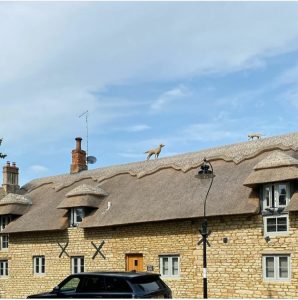
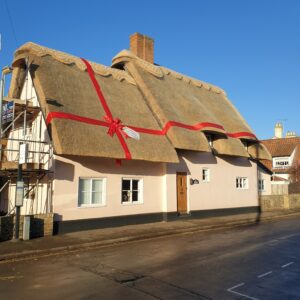
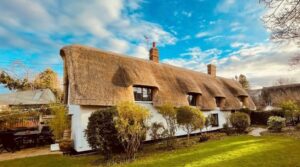
Modern innovations in thatching are changing how traditional roofs are built, maintained, and protected. While thatching remains a skilled craft rooted in heritage, new technologies and materials now play a key role in improving safety, durability, and long-term performance for homeowners.
At Simply Thatch, we see modern innovation in thatching as a way to strengthen the craft, not replace it. The hands-on skill of the thatcher still matters most. Nevertheless, new technology and better protective systems can help homeowners make their roofs safer, easier to monitor, and more resilient over time.
That matters because thatch is not just decorative. Current technical guidance recognises thatched roofing as part of the waterproof building envelope, and typical service lives depend heavily on material quality, workmanship, roof design, exposure, and maintenance. In practice, modern innovations in thatching work best when they support those fundamentals rather than distract from them.
What Do We Mean by Modern Innovations in Thatching?
Modern innovations in thatching are not about turning a traditional cottage into something artificial. Instead, they help improve safety, durability, inspection, and long-term care while preserving the natural look of the roof.
For homeowners, the most useful innovations usually fall into five areas:
• Fire-retardant sprays and treatments
• Fire-resistant barrier boards or membranes
• Drone roof inspections and photographic reporting
• Improved netting and wire mesh protection
• Eco-conscious maintenance and breathable treatments
Together, these developments help bridge the gap between heritage craft and modern expectations. As a result, homeowners can enjoy the character of a thatched roof with more confidence and better information.
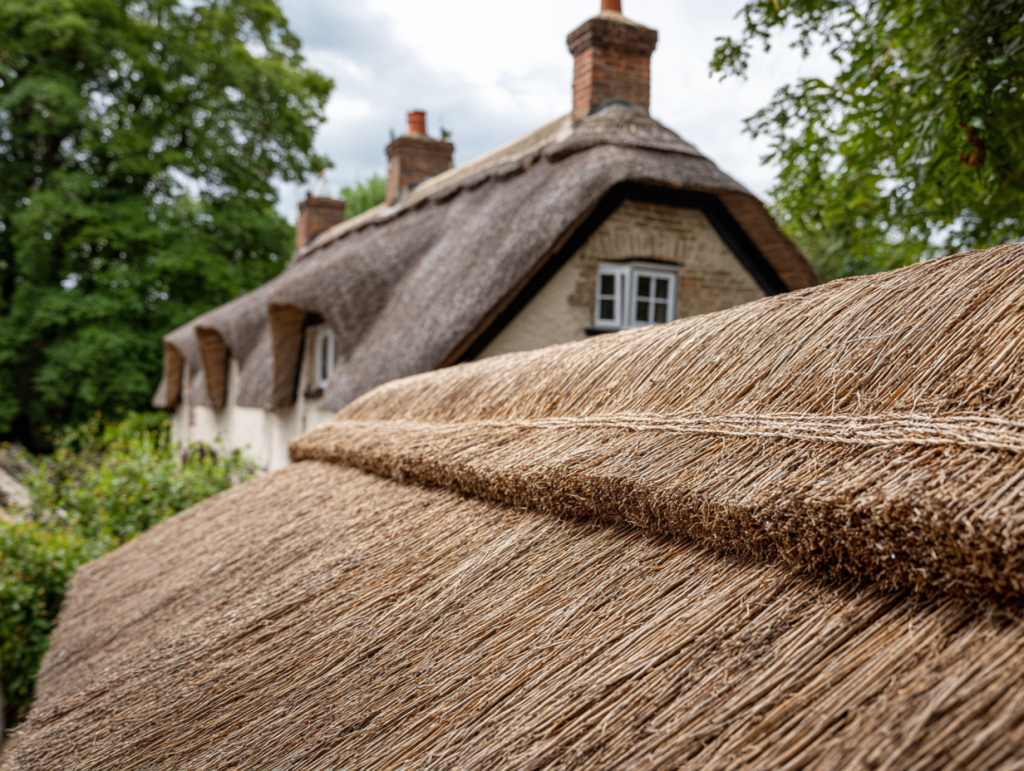
Fire Safety Is Where Innovation Matters Most
Fire safety has become one of the clearest areas of progress in modern thatching. Thatched roofs remain combustible by nature, so no responsible thatcher should ever suggest that a product makes them fireproof. However, modern fire precautions can reduce risk, slow fire development, and improve the chances of early response.
Historic England’s current fire guidance takes a careful view of thatched properties, particularly where wood-burning or multi-fuel stoves are involved. Its fundamental recommendation is that these stoves should not be used in thatch-roofed buildings. Therefore, any modern fire safety strategy must start with chimney condition, flue design, heating choices, and sensible day-to-day use, not just surface treatment.
Fire-retardant sprays and coatings
Fire-retardant sprays are one of the better-known modern innovations in thatching. Specialists apply these treatments to help resist ignition and slow the spread of flame. In addition, some systems can form part of an insurer’s risk management conversation.
However, we always advise homeowners to see fire-retardant treatment as one layer of protection. Weathering and UV exposure can reduce effectiveness over time, so treatments may need reapplication. They also do not remove the need for chimney sweeping, electrical checks, alarms, and good maintenance. Simply Thatch’s own fire safety guidance takes the same balanced view, fire-retardant treatments help, but they do not make a thatched roof fireproof.
Fire-resistant barrier boards
Fire-resistant barrier boards and membranes sit beneath the thatch, usually between the roof timbers and thatching material. These systems aim to protect the structure of the house if the thatch ignites. Consequently, they can give occupants more time to respond and may help limit damage to the building fabric.
The Dorset Model guidance for thatched extensions refers to rafters being overdrawn with a minimum 30-minute fire barrier, with water-resisting and breathable detailing considered carefully. It also recommends battens on microporous boarding so the thatch can breathe. This point matters because a thatched roof must still manage moisture properly. A fire barrier that traps damp can create a different problem.
At Simply Thatch, we look at these systems as part of the whole roof design. On a new build, extension, or full rethatch, the opportunity to install a barrier can be much greater than on a roof where the existing thatch remains in place.
Smarter Chimney and Heat Monitoring
Modern fire safety also includes better monitoring. For example, insurer guidance now highlights heat detectors around chimney areas, flue temperature monitoring, mains-powered alarms, and regular chimney inspections. These are not visual changes, but they can make a meaningful difference to risk management.
In practice, the chimney remains one of the most important areas of any thatched property. A beautifully thatched roof can still be vulnerable if the chimney stack, flue liner, mortar, pot, or sweeping schedule falls short.
For this reason, we often encourage homeowners to think beyond the roof surface. The best modern thatching approach considers the thatch, chimney, electrical installation, loft space, alarms, and access for emergency services as one connected system.
Drone Roof Inspections and Better Evidence
Another useful innovation is the drone roof inspection. Drones will not replace a skilled thatcher’s judgement, but they can provide a safer and faster way to inspect difficult roof areas, especially ridges, chimneys, valleys, dormers, and high elevations.
RICS notes that drones can capture high-resolution images and data, make building surveying quicker and more cost-effective, and help inspect roofs, stacks, gutters, and flashings more safely than traditional access in some situations. For thatched homes, this can be especially useful where scaffolding would be disruptive or where a first visual assessment needs to happen quickly.
Where drones help most
Drones work particularly well for:
• Checking storm damage after high winds
• Reviewing ridge condition from above
• Recording chimney and flashing details
• Comparing roof condition over time
• Supporting insurance or maintenance records
However, drone footage still needs expert interpretation. A clear aerial photograph can show a worn ridge, heavy moss, exposed fixings, or suspicious thinning. Nevertheless, an experienced thatcher must decide what those signs mean and what work, if any, the roof needs.
Improved Netting and Pest Protection
Birds, rodents, and weather exposure can all shorten the life of a thatched roof. Therefore, modern pest protection focuses on prevention rather than reactive repair.
Improved wire mesh and netting help secure the roof surface and reduce disturbance from birds and vermin. Aviva’s thatched roof guidance notes that exterior wire netting can protect against damage from vermin, birds, and bad weather. It also explains that contractors should install replacement netting in line with fire and rescue guidance, because crews may need to remove sections during a fire.
That detail is important. Netting should protect the roof, but it should not create avoidable problems during emergency access. As a result, we treat netting as a practical roofing detail, not just a quick add-on.
A better approach to pest prevention
Good pest prevention usually combines several measures:
• Secure, well-fitted netting
• Prompt repair of lifted or damaged areas
• Reduced overhanging branches where possible
• Careful control of food sources near the property
• Regular inspection of ridges and vulnerable edges
This approach keeps the roof looking natural while reducing the risk of avoidable damage.
Eco-Conscious Materials and Treatments
Thatching already has strong environmental credentials when specified and maintained properly. Straw and reed are natural, renewable materials, and Simply Thatch’s own guidance highlights the insulation benefits and environmental appeal of thatched roofs. Aviva also describes thatched roofing as attractive, environmentally friendly, and well-insulated, while still noting its combustible nature.
However, modern eco-conscious thatching goes further than material choice. It also means choosing treatments and maintenance methods that respect breathability, avoid sealing moisture into the roof, and support a longer service life.
For example, moss and algae control should never become aggressive damage. A thatched roof needs to dry naturally after rainfall, so heavy shade, poor ventilation, and trapped organic matter all need attention. Meanwhile, any treatment must suit the roof material, roof age, exposure level, and conservation setting.
At Simply Thatch, we take a practical view. The most sustainable roof is often the one maintained well enough to delay unnecessary replacement.
Digital Records and Planned Maintenance
One of the quieter modern innovations in thatching is better record-keeping. Homeowners now benefit from dated photographs, inspection notes, drone imagery, treatment records, and maintenance schedules.
This matters because thatched roofs age gradually. Without records, it can be hard to remember whether the ridge looked the same two years ago, whether moss has spread, or whether a small repair has changed. With records, decisions become much clearer.
LABC guidance gives typical service lives of 25 to 40+ years for water reed, 25 to 35 years for combed wheat reed, and 15 to 25 years for long straw when regular maintenance supports the roof. It also notes that ridges usually need attention sooner, often every 10 to 15 years. Therefore, a good maintenance record helps homeowners plan ahead rather than react late.
What Innovation Cannot Replace
Despite all these advances, modern thatching technology cannot replace skilled workmanship. A drone can show a ridge problem, but it cannot re-ridge the roof. A fire-retardant treatment can slow flame spread, but it cannot correct a poor chimney detail. A fire barrier can protect the structure, but it cannot compensate for badly laid thatch.
For this reason, modern innovations in thatching work best when they support traditional craft. The thatcher still needs to understand pitch, material, coat thickness, spar work, weather exposure, ventilation, local tradition, and the way natural materials behave over time.
That is where experience matters. At Simply Thatch, we use modern tools and guidance to strengthen our decisions, but the roof itself still depends on hands-on craft and proper judgement.
FAQs About Modern Innovations in Thatching
Can modern treatments make a thatched roof fireproof?
No. Modern fire-retardant treatments can help resist ignition and slow flame spread, but they do not make thatch fireproof. Homeowners still need good chimney maintenance, suitable alarms, safe electrical installations, and careful heating choices.
Are fire barriers worth adding beneath thatch?
Often, yes, especially during a full rethatch, new build, or extension where the roof structure is accessible. Fire barriers can help protect roof timbers, but they must be breathable, correctly specified, and suitable for the building.
Can drones replace a thatch survey?
No. Drones can provide excellent visual evidence, especially for high or difficult areas. However, a thatcher still needs to interpret the images and, where necessary, inspect the roof more closely.
Do modern innovations change how a thatched roof looks?
Usually, no. Many of the most useful innovations sit beneath the thatch or support maintenance behind the scenes. For example, fire barriers, inspection records, heat monitoring, and drone reports can improve care without changing the roof’s traditional appearance.
Final Thoughts
Modern innovations in thatching are not about moving away from tradition. Instead, they help homeowners protect traditional roofs with better tools, safer systems, and clearer information.
Fire-retardant treatments, fire-resistant barriers, drone inspections, improved netting, and eco-conscious maintenance all have a role to play. However, they work best when an experienced thatcher applies them with care and judgement.
At Simply Thatch, we believe the strongest thatched roofs combine old and new. The craft remains traditional, but the thinking behind safety, inspection, and maintenance continues to move forward. Ultimately, that is how homeowners get the best of both worlds, a roof full of character and a maintenance approach built for modern living.